

Ask any parent of a toddler about food and you will hear the same story.
Refuses vegetables. Has decided pasta is only acceptable if it’s penne, not rotini. Throws anything unfamiliar across the room with the accuracy of a small, furious athlete. Mealtime is a battle and everyone loses. Then those same parents tell us their child came home from Choober Doobers asking for wonton soup. And green beans. That’s not magic. It’s what happens when food is taken seriously.
What We Actually Serve
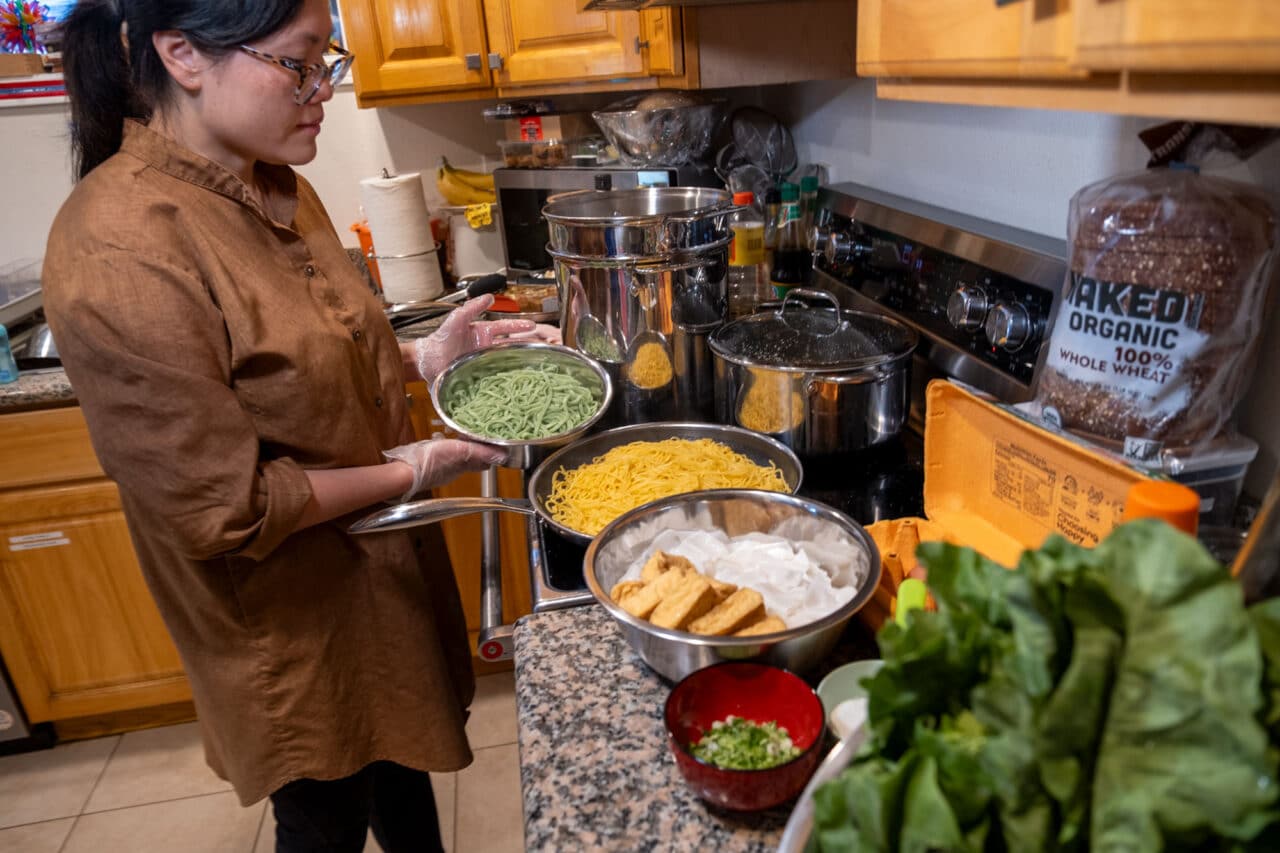
Most meals at Choober Doobers are scratch-made daily in our own USDA-certified kitchen using mostly organic ingredients. We serve a rotating international menu: homemade pizza, wonton soup, fresh pasta, roasted green beans, tacos, Thai-inspired rice dishes, and more.
Breakfast, lunch, and afternoon snack are all included in tuition. No lunchboxes. No mystery ingredients on a laminated menu you never quite trust.
We accommodate most food allergies and always ask families about their child’s needs during enrollment. If your kid has a thing about onions being visible, we can’t promise miracles, but we’ll do our best.
Why Picky Eaters Do Better Here
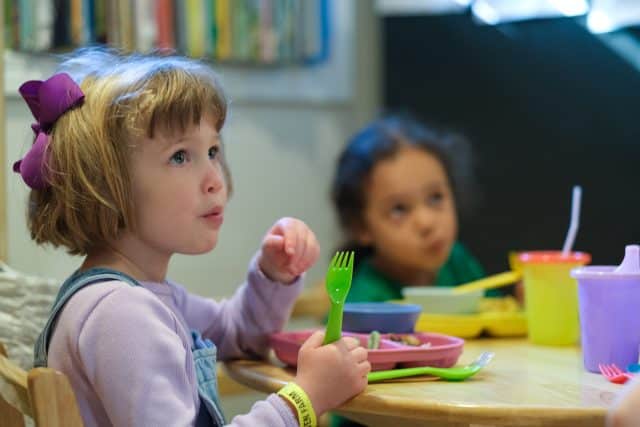
One of the most consistent things we observe is that children who refuse certain foods at home will eat them here. This is not a coincidence and it is not us secretly bribing toddlers with screen time.
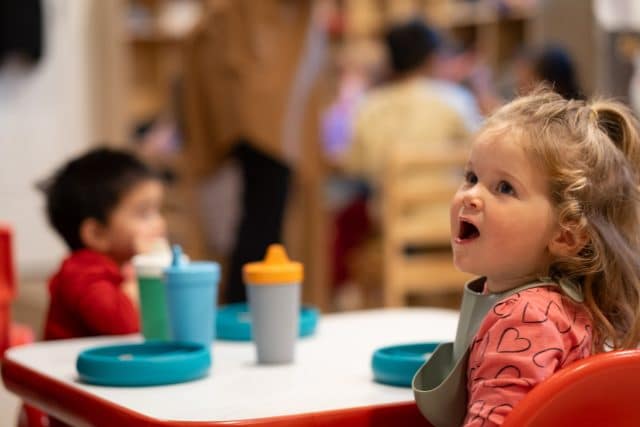
The research on this is clear: children are social eaters. When a child sees their friends eating something with genuine enthusiasm, the barrier drops in a way that a parent’s patient encouragement simply cannot replicate. A child who has decided she does not like broccoli at home has only her own prior experience to draw on. At Choober Doobers, she watches six friends eat it, enjoys it prepared a new way with a familiar sauce, and quietly updates her opinion.
Research published in the International Journal of Behavioral Nutrition and Physical Activity found that young children consistently eat more fruits and vegetables in group care settings than at home, with peer modeling identified as the primary driver. (Read the study)
Peer modeling is one of the most powerful tools in early childhood nutrition, and it’s completely free when you put kids at a table together.
What USDA CACFP Certification Actually Means
When we say our kitchen participates in the USDA Child and Adult Care Food Program (CACFP), we mean our meals meet federal nutrition standards for children in licensed care settings, covering meal patterns, food safety, and age-appropriate nutrient requirements. Learn more about CACFP
What it means practically: there’s a documented framework behind what lands on the plate, not just vibes and whatever’s on sale that week.
It also means we’re accountable in an inspected, reported way, not just on our word.
Mostly Organic: What That Means and Why We’re Honest About It
We say “mostly organic” because that is what is true.
We prioritize organic ingredients, particularly for the items that matter most: produce, proteins, and dairy, with close attention to the Environmental Working Group’s Dirty Dozen list, which identifies the twelve fruits and vegetables with the highest pesticide residues when conventionally grown.
But we won’t claim 100% organic on everything, because that would require charging significantly more or occasionally serving subpar ingredients when organic supply runs short. We’d rather be honest with you than hand you a marketing claim we can’t always back up.
What we can tell you: Kanlayanee shops for ingredients herself every weekend — it’s her thing, and no amount of convincing has moved her toward delivery. Most meals are made from scratch, and no child at Choober Doobers is eating something that came out of a bag and was heated in a microwave.
The Bigger Picture
What children eat in their earliest years shapes more than their health today. It shapes their relationship with food, with trying new things, with sitting together and sharing a meal. According to the CDC, eating habits and food preferences formed in early childhood have lasting effects on health outcomes well into adulthood. Read more from the CDC
Those habits are built early. We think a lot about this, and it’s one of the reasons our kitchen is not an afterthought at Choober Doobers. It’s a core part of what we offer.
The 3:1 student-to-teacher ratio gets a lot of attention (and it should). But a warm, mostly-from-scratch meal eaten together at a small table with a few good friends might be quietly doing just as much work.
Choober Doobers is a licensed family home daycare in Shoreline, WA. Enrollment inquiries welcome.
What’s the one food your kid absolutely refuses at home that you secretly suspect they’d eat here? We’d love to hear from you. And if you’re curious about what’s on the menu this week, come see for yourself. Schedule a tour and we’ll show you around the kitchen too.

